Wednesday, December 5, 2012

What is a Journalist- Revisited

In the leviathan of the machine that is democracy, journalism is the cogs that keep it turning. It allows the people the knowledge they need to make informed decisions, it keeps politicians and corporations honest, and it broadens the perspective of the public by telling them the things they need to know. A journalist is an individual that puts his or her life aside to seek out truth- and reports it, whatever the cost. It's a noble profession worthy of only the truly dedicated.
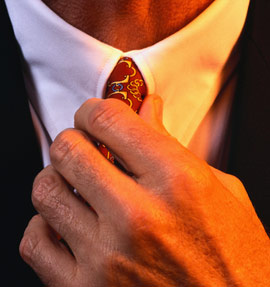
So make sure you tie your necktie really well.
That's what it should be. But reality, unfortunately, is no mirror for perfection, and it is clear that today reporters are less the white knights than they are the grunge-churning peasants. Today, we see the creeping return of the guiding principles of old: sensationalism, partisanism, yellow journalism. This decline of quality journalism does no one any good: the public loses it's faith in the media, the media loses it's respectability, and journalism declines.
Of course, the decline of some newspapers isn't necessarily a bad thing.
Take the recent paper by the New York Post, which splashed a horrific photo of a man seconds before he was run over by a subway. Obviously, a terrible tragedy- both for the man, and that the Post decided to print such graphic filth. But what have other news organizations done? Publicized the Post's poor judgement, essentially spreading it's corrosive influence farther than the fringe newspaper could ever hope to do on it's own! This is a travesty of what journalism should be and an embarrassment to the industry.
Honestly, they shouldn't be allowed to walk around without their heads in paper bags.
So that's where journalism stands as of now. A once noble pillar, battered and cracked through the ages. Budget cuts threaten to cripple the industry even further. But there is hope- journalism will always have hope that new and idealistic reporters will return the news to it's former glory. That's the kind of individuals that journalists need to be. And it's my hope that it's what they return to. Until next time.
Stay classy, blogosphere.

Thursday, November 29, 2012

An Objective Truth


Objectivity: it's a mythical ideal, a sort of journalistic holy grail. To be a part of a completely neutral news force, writing and reporting articles miraculously free of bias of any kind, would be a lot like riding a unicorn- awesome, a harbinger of a  perfect world, and completely unrealistic. 
Unfortunately, not going to happen.
That doesn't mean that it's not worth striving for. Obviously, journalistic objectivity is the gold standard that every reporter should strive for. But seeing as absolute objectivity (and unicorns) don't exist, an actual standard is needed. The true definition of objectivity, then, is being able to both acknowledge and work aside bias for the sake of accurate reporting. It means recognizing that completely nonpartisan reporting is both unachievable but still worth shooting for.
Doing the impossible is just another day on the job.
This helps put a framework for how a journalist needs to function. There are lines that reporters shouldn't cross, and those that they should. The truth needs to established through dedicated reporting, fact checking, and commitment to a higher ideal. That being said, failures will be made as journalistic integrity is jettisoned in some circumstances. But the foundation of ethical journalism will create a framework that allows journalism to flourish while being held accountable by other news organizations. It's a tricky balance to achieve, but it's imperative to try. A journalistic holy grail is worth an attempt at least.

Another interesting perspective on objectivity in journalism: http://www.opendemocracy.net/media-journalismwar/article_1218.jsp

Thursday, November 15, 2012

So You Want To Be A Reporter

Why would I want to be a journalist? Why would I pick a major that would disappoint my grandmother, attempt to wrest a job from an ever-shrinking workforce, and all but guarantee that my income will be too low to buy my dream house in Santa Barbara? It's because journalism is more than a profession, more than some nine-to-five grind every week. Being a journalist is a higher calling- it's a mission to the American public, to provide them with the essential, hard-hitting news they need to be participatory and informed citizens in a democracy. Given the state of America today, I feel like everyone could really use me.
40% of Americans couldn't even get off the couch this year
to vote for the freaking President of the United States.
Of course, I'll admit there's some ulterior motive here. I like being up in front of a camera and talking. And the perks of meeting interesting people, celebrities, and getting up from a desk to explore what's going on in the community are all factors. And I feel like constantly reporting on new topics will make me at least a little bit smarter. (Or at least smarter looking, but that's important too.) But at the core of it is the fact that I really want to make a difference. I don't want to spend my working hours as a blip on the radar of life. I want to be out in the world, using an intellectual machete to cut through lies and red tape, at least making some small impact on people's lives.
I want to be this kind. This kind of journalist.
They say the unexamined life is not worth living, and I want to examine life- reporting stories, exposing corruption, and being a force for justice. And you know, be on TV. Maybe that's a little bit selfish. But hey, I'm giving up my potential Santa Barbara dream house for this. That's got to be worth something here.


Even Forbes agrees with me! Check out this article to see some other reasons why journalism doesn't suck: http://www.forbes.com/sites/jeffbercovici/2012/04/16/forget-that-survey-heres-why-journalism-is-the-best-job-ever/

Thursday, November 8, 2012

It's the end of the world- again


Do you remember 2009? You know, when the global pandemic known as swine flu swept uncontrollably across the globe, leaving an unimaginable trail of death and destruction in its wake? You don't remember that? Weird- if you'd been reading, listening, or watching the news, you would have equivocated the rather mild outbreak of the H1N1 virus with the beginning of the end of civilization as we know it.
Aporkalypse now! Get it? C'mon, that was a good one.
 It's obvious that this story was blown out of proportion by the media as a whole. And the reasons are pretty apparent. The news cycle is driven by 24-hour reporting, and with a constant demand for fresh talking points there is always a burden to be sensational. It's like a watered down version of yellow journalism, where the biggest and best headline wins. In a slow-news period like the spring of 2009, H1N1 broke out at just the right time. Media coverage put the fuel on the fire, and public fear ignited it like a 50-gallon drum of oil at a matches party.
Pictured above- public sentiment.
Had there been more of a sedated reaction to the swine flu scare, things could have turned out differently. Cool, unbiased reporting of the facts, not scientists' worst-case-scenario predictions, could have kept the public calm and kept fear from spreading, ironically enough, like a virus. In hindsight, we realize how overblown our fears were- the death rates for swine flu barely exceeded the usual range for seasonal illnesses. While people were infected, vaccines quickly ended the H1N1 virus. However, the paranoia generated ended up hurting airlines, theme parks, and other businesses caught up in the deluge of fear. One would hope this scare would cure the media's fondness for overhyping stories. Sure- when pigs fly.

An old CNN article takes a look back at the swine flu hype: http://www.cnn.com/2009/HEALTH/12/30/top.health.stories/index.html#cnnSTCText

Wednesday, October 31, 2012

College Kid Writes Stunning Exposé Blog! Read All About It!


Yellow journalism- a relic of a bygone era, when young newspapers screamed sensational headlines and the public lapped it up. The stories were generally overblown, consistently downplayed and overplayed key facts, and often could only be considered news under the broadest possible definition of the term. Who am I kidding? National TV these days fits the same bill. In the 24-7 news cycle we live in, we are bombarded in every direction from every network with the latest stories. And as has been the case for decades, news editors know that big headlines sell.

Yellow journalism- now in color.
This is not to say that journalism today is all like journalism then. Standards have tightened- we hold our newsmen to a higher standard of truth, and fact checking blasts through outright lies like a sneeze through wet Kleenex. But the compulsion to take the significant and make it sensational, in a frantic bid to get higher ratings or more web traffic, is only undermining the hard work true journalists do.
You know, this type of work.
Using interviews, telling stories to supplement the facts, digging for every detail- this is what good journalists are capable of doing. Thorough investigations of stories and leads can turn a dull story into a fleshed-out article capable of influencing and informing public opinion. They can tell a compelling, informative story without resorting to sensationalism or blowing things out of proportion. There may not be the glamour of penning a headline that has the whole country seeing red. But it beats yellow.

Still, people don't always get things right. This site helps: http://factcheck.org/

Tuesday, October 23, 2012

Public Forum of Dreams


"If you build it, they will come."
If journalists start the conversation, the public will join in. That's why true investigative journalism is so important. Journalists have the duty to bring stories to light that might otherwise never be told, to shake citizens out of complacency when something is wrong, and to engage the public in conversation about serious issues. As the ones responsible for getting the facts out there, the burden is especially high for reporters to dredge forth accurate and unbiased information so the public can make educated and informed decisions. If there is a marketplace of ideas available, the average citizen can both benefit from and contribute to a public forum of information.
The trade-off is Internet comments.
Of course, this is a two edged sword. If allowed to dictate the terms of the conversation, news outlets can blow issues wildly out of proportion and mislead readers or watchers with incomplete or prejudiced facts. It's important that while journalists start the news by breaking important stories, they don't also dictate its terms and control the perspective at the cost of the public.
It'd be like someone jumpstarting your car and then driving off with it.
Essentially though, the bulwark of our democracy is the voice of the people. And the people need information in order to formulate opinions, interact with society, and participate in the democratic processes that make our country the great nation it is today. So a public forum like a newspaper is essential, the journalists chronicling the news just as much so. That marketplace of ideas isn't going to build itself.

In this article, the Guardian editor Alan Rusbridger writes about the importance of a free press in engaging the public: http://www.guardian.co.uk/media/2011/oct/06/importance-free-press-alan-rusbridger

Thursday, October 18, 2012

Live and Learn? Apparently not.

Free journalism- it exists to be our watchful protector, our not-so-silent guardian, our voice that uncovers injustice and deceit.
Basically, our Batman.
That's why investigative, unbiased press is so important- it can bring us the information that we need to know. This lesson was irrevocably seared into my brain back in 2011, when I was but a lad and still innocent to the ways of the world. The local paper of my hometown, the Santa Barbara NewsPress, published a stunning 5-part expose of award-winning police officer Kasi Beutel. The articles uncovered  her shady past, a possible history of faulty DUI convictions, and bankruptcy fraud as reasons for this cop's patent unreliability. The NewsPress scooped enough dirt on Officer Beutel to put her six feet under. Sounds like good reporting, right? Quality journalism strikes again, right? Wrong!

Officer Beutel: the female one
Psych! (And I don't mean the TV show.) What makes this whole series suspect is that the man who penned these tirades: a Mr. Peter Lance, who had been pulled over by Officer Beutel for drunk driving and failed the breath test (he blew a .09, over the legal limit.) Now, Mr. Lance may have had perfectly valid points against Officer Beutel. Certainly, his expose had some merit, such as uncovering that Santa Barbara police vehicles do not come equipped with video cameras. But he is the very definition of a biased reporter. He clearly has a personal stake in the game! To pass this off as objective journalism is to make a mockery of the profession. As LA Times columnist James Rainey wrote, "The DUI opus in the News-Press... was presented as a straight news story, written by someone who has a lot riding on the outcome."
Peter Lance: Someone who has a lot riding on the outcome

This whole Peter Lance debacle made a powerful impact on me. I realized that to have credibility, a journalist must be objective and to some degree removed from the story he's covering. The NewsPress could have delivered a much more effective and powerful story had they used one of their own impartial reporters as opposed to to an independent correspondent with an undeniable bone to pick. Whether the officer is guilty as accused is at this point irrelevant. The issue is so clouded that a clear account of the truth will probably never be revealed. That's a shame. And by the way, Lance has recently begun skewering Beutel through the Newspress once again, which frankly is just dumb. Even Batman learned from his mistakes.

Unfortunately, the SB Newspress does not publicize its archive unless you have an account. Here is a link to the page where you could view the article: http://www.newspress.com/Top/Search/results.jsp?dateOrdered=true&articleIndex=100&pageNum=6
Here's an LA Times article on the subject: http://articles.latimes.com/2011/jul/02/entertainment/la-et-onthemedia-20110702
And here's some good journalism: The Independent (Santa Barbara's variant paper) columnist Nick Welsh brought this conflict of interest into the limelight in the first place:  http://www.independent.c om/news/2011/jun/30/putting-ow-back-bow-wow/