Wednesday, October 31, 2012

College Kid Writes Stunning Exposé Blog! Read All About It!


Yellow journalism- a relic of a bygone era, when young newspapers screamed sensational headlines and the public lapped it up. The stories were generally overblown, consistently downplayed and overplayed key facts, and often could only be considered news under the broadest possible definition of the term. Who am I kidding? National TV these days fits the same bill. In the 24-7 news cycle we live in, we are bombarded in every direction from every network with the latest stories. And as has been the case for decades, news editors know that big headlines sell.

Yellow journalism- now in color.
This is not to say that journalism today is all like journalism then. Standards have tightened- we hold our newsmen to a higher standard of truth, and fact checking blasts through outright lies like a sneeze through wet Kleenex. But the compulsion to take the significant and make it sensational, in a frantic bid to get higher ratings or more web traffic, is only undermining the hard work true journalists do.
You know, this type of work.
Using interviews, telling stories to supplement the facts, digging for every detail- this is what good journalists are capable of doing. Thorough investigations of stories and leads can turn a dull story into a fleshed-out article capable of influencing and informing public opinion. They can tell a compelling, informative story without resorting to sensationalism or blowing things out of proportion. There may not be the glamour of penning a headline that has the whole country seeing red. But it beats yellow.

Still, people don't always get things right. This site helps: http://factcheck.org/

Tuesday, October 23, 2012

Public Forum of Dreams


"If you build it, they will come."
If journalists start the conversation, the public will join in. That's why true investigative journalism is so important. Journalists have the duty to bring stories to light that might otherwise never be told, to shake citizens out of complacency when something is wrong, and to engage the public in conversation about serious issues. As the ones responsible for getting the facts out there, the burden is especially high for reporters to dredge forth accurate and unbiased information so the public can make educated and informed decisions. If there is a marketplace of ideas available, the average citizen can both benefit from and contribute to a public forum of information.
The trade-off is Internet comments.
Of course, this is a two edged sword. If allowed to dictate the terms of the conversation, news outlets can blow issues wildly out of proportion and mislead readers or watchers with incomplete or prejudiced facts. It's important that while journalists start the news by breaking important stories, they don't also dictate its terms and control the perspective at the cost of the public.
It'd be like someone jumpstarting your car and then driving off with it.
Essentially though, the bulwark of our democracy is the voice of the people. And the people need information in order to formulate opinions, interact with society, and participate in the democratic processes that make our country the great nation it is today. So a public forum like a newspaper is essential, the journalists chronicling the news just as much so. That marketplace of ideas isn't going to build itself.

In this article, the Guardian editor Alan Rusbridger writes about the importance of a free press in engaging the public: http://www.guardian.co.uk/media/2011/oct/06/importance-free-press-alan-rusbridger

Thursday, October 18, 2012

Live and Learn? Apparently not.

Free journalism- it exists to be our watchful protector, our not-so-silent guardian, our voice that uncovers injustice and deceit.
Basically, our Batman.
That's why investigative, unbiased press is so important- it can bring us the information that we need to know. This lesson was irrevocably seared into my brain back in 2011, when I was but a lad and still innocent to the ways of the world. The local paper of my hometown, the Santa Barbara NewsPress, published a stunning 5-part expose of award-winning police officer Kasi Beutel. The articles uncovered  her shady past, a possible history of faulty DUI convictions, and bankruptcy fraud as reasons for this cop's patent unreliability. The NewsPress scooped enough dirt on Officer Beutel to put her six feet under. Sounds like good reporting, right? Quality journalism strikes again, right? Wrong!

Officer Beutel: the female one
Psych! (And I don't mean the TV show.) What makes this whole series suspect is that the man who penned these tirades: a Mr. Peter Lance, who had been pulled over by Officer Beutel for drunk driving and failed the breath test (he blew a .09, over the legal limit.) Now, Mr. Lance may have had perfectly valid points against Officer Beutel. Certainly, his expose had some merit, such as uncovering that Santa Barbara police vehicles do not come equipped with video cameras. But he is the very definition of a biased reporter. He clearly has a personal stake in the game! To pass this off as objective journalism is to make a mockery of the profession. As LA Times columnist James Rainey wrote, "The DUI opus in the News-Press... was presented as a straight news story, written by someone who has a lot riding on the outcome."
Peter Lance: Someone who has a lot riding on the outcome

This whole Peter Lance debacle made a powerful impact on me. I realized that to have credibility, a journalist must be objective and to some degree removed from the story he's covering. The NewsPress could have delivered a much more effective and powerful story had they used one of their own impartial reporters as opposed to to an independent correspondent with an undeniable bone to pick. Whether the officer is guilty as accused is at this point irrelevant. The issue is so clouded that a clear account of the truth will probably never be revealed. That's a shame. And by the way, Lance has recently begun skewering Beutel through the Newspress once again, which frankly is just dumb. Even Batman learned from his mistakes.

Unfortunately, the SB Newspress does not publicize its archive unless you have an account. Here is a link to the page where you could view the article: http://www.newspress.com/Top/Search/results.jsp?dateOrdered=true&articleIndex=100&pageNum=6
Here's an LA Times article on the subject: http://articles.latimes.com/2011/jul/02/entertainment/la-et-onthemedia-20110702
And here's some good journalism: The Independent (Santa Barbara's variant paper) columnist Nick Welsh brought this conflict of interest into the limelight in the first place:  http://www.independent.c om/news/2011/jun/30/putting-ow-back-bow-wow/

Friday, October 5, 2012

Food for Thought

Journalists should not be neutral, according to your text. If this is the case, how do they accurately cover the news? How does this influence your perspective on the news?
Above you see the definition of the word neutral. As we've heard countless times, this should be what a journalist strives for: impartiality, just reporting the news without opining it. But as I may have previously ranted about, this simply is not the case. That's because journalism is not written by impersonal machines (not yet anyways,) it's written by humans. People. And people have opinions and thoughts and emotions, things that must be quashed in order to write a truly unbiased piece of journalism. An interesting contradiction: reporters and journalists, guardians of the free press and the standard bearers of free speech, are forced to rein in their own opinions and walk the tightrope of neutrality when publishing their work? This seems contradictory, though journalism organizations (claim to) stake their reputations on doing exactly that. 
You didn't expect you'd doing this when you got that job at the newspaper, did you?
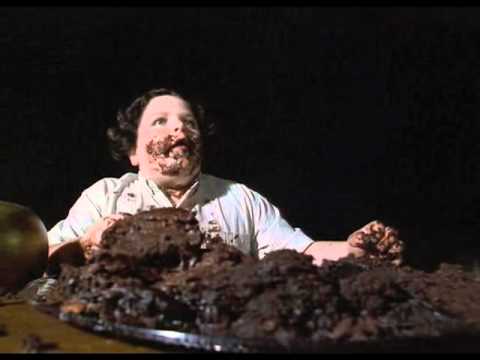
So is there such a thing as an objective press? The short answer, essentially, is no. And that's not necessarily a bad thing. It's natural to have bias, but it is important to recognize that fact and acknowledge it. More importantly, the public needs to realize this and make informed media decisions.   Using the vast power of the Internet that we have essentially sitting on hand, we have the ability and duty to make sure what we read and watch is conforming to the truth. A metaphor: if journalism is food, then watch what you eat. And try to keep a balanced diet. Don't just pig out on junk.
Pictured above: Unhealthy media consumption habits
Here's a very interesting article on objectivity in journalism I found (ironically enough) at the Huffington Post: http://www.huffingtonpost.com/karthika-muthukumaraswamy/media-has-a-yang_b_1921683.html
Enjoy and peace out.

Thursday, September 27, 2012

Called to Serve

Do you believe journalists truly serve you, the citizen? Why or why not? What should be done differently so that you, the citizen, are effectively served?

A journalist's first loyalty is to the truth? Perhaps. But a man's first loyalty is to support his family, and truth doesn't put bread on the table or pay for the kid's orthodontics. So journalists have jobs, and the truth is that in the end the journalist isn't serving you, the citizen- he's serving it, the company that's keeping him employed. And for a lack of a better metaphor, it's the carrot and the stick: the journalist writes his story, does a good job, and receives a paycheck, or he doesn't do his work and is subsequently fired. This makes the average reporter's day-to-day focus less on serving Average Joe Citizen and more about meeting the ever-present looming deadline. This is not to say there isn't good journalism out there- there's plenty of it, both print and broadcast- but at the end of the day, you aren't even the news company's primary customer. The advertiser is.
This guy had no idea.
 I'm being too harsh. Just because the journalist isn't necessarily serving the citizen (they're not waiters, after all) does not mean the citizen isn't being effectively served. With the advent of the digital era, we have access to more information than in any time previous. We are being served a veritable five-course meal's worth of reporting and news. Of course, this makes it even harder to discern who is dispensing veiled propaganda and who is holding their bias in check. Then again, as I learned in my Journalism class only yesterday, objectivity is essentially impossible. Even when an effort is being made to step past personal bias, the worldview of the journalist still influences their work.

So is the citizen being effectively served? Polls, like the one conducted above by the Pew Research Center, make it clear that the public doesn't think so. But is there any consensus as to what being "effectively served" is? Do we want pure logistical facts? Do we want commentary or punditry? Journalists ought to be lauded with praise for the job they do do, adapting and keeping the public informed at breakneck speed. Someone should offer them a carrot or something. Goodness knows they get beaten with enough sticks.

For even cooler looking graphs than the one above, check out the Pew Research Center for the People and the Press. They've got something for everyone!

Friday, September 21, 2012


Do you believe journalists report the truth? Why or why not?


The legendary Johnny Cash once sang: "Can you blame the voice of youth, for asking/ What is truth?"
Pictured: the voice of a generation of truth seekers
Before asking whether or not journalists report the truth, a better question, perhaps, is what is truth? The answer is complicated- truth, especially when applied in the world of journalism, depends on sorting through the facts at one's disposal to tell the most accurate story of what took place. As more news is uncovered and more details come to light, the truth of a story may shift and change. Two journalistic goals, therefore, are correspondence and coherence: getting the facts straight while making sense of them. While its overall nature may be subjective, it's still important that truth remain the objective for all reporters to strive for. As those who essentially discover and direct what information we receive, dedication to providing accurate news (the basis for accurate opinions) should be their top priority. Is it?

Polls show trust in the media is at an all time low, and that journalists rank in the bottom tier of trustworthy occupations, hovering somewhere between bankers and politicians. Clearly, the public doesn't think so. Just turning on the television bombards the viewer with reporters slandering the coverage of other reporters, while talk radio is closer to "yell-and-bicker radio" than civil discourse. So apparently journalists don't think journalists tell the truth either.

Personally, I feel that journalists, in general, tell the truth. Or at least they intend to. Speaking generally, no journalist sets out to tell a completely fabricated story to the public. However, their human bias tints the perspective of any reporter, resulting in sometimes distorted accounts of what the truth is.
Truth is like Instagram, only slightly more filtered
So while I believe journalists report the truth, I also believe that truth's subjective nature sometimes makes it hard to judge it accurately. It's easy to point fingers and blame our news agencies for distorted truth while ignoring our own sizable biases. Thus, while journalists may strive to report only the truth, it takes extensive self-judgement to publish an unbiased truth.
Of course, some less than scrupulous journalists disregard this whole business of truth-telling and just straight-up lie. But that's a good way to end up, as Johnny Cash put it, "stuck in Folsom Prison."

Check out this link for the Edelman Trust Barometer, which measures the levels of trust in various institutions, including the media.

Thursday, September 13, 2012


What purpose does journalism serve in your life?
"Never has freedom of information been so closely associated with democracy... The equation is simple. The absence or suppression of civil liberties leads necessarily to the suppression of media freedom."      -Press Freedom Index, 2011-2012

Journalism is essential to freedom, which in turn is essential to democracy. In totalitarian regimes, governments control the populace through a combination of media suppression and tightly hierarchal corridors of power. In other parts of the world, corruption and lawlessness leaves journalists fending for themselves, though this has begun to change. In the United States, we're blessed with a democracy that allows the people to elect their leaders. We have a Constitution that protects our basic rights and and grants us civil liberties. In other words, we're doing pretty good.


Pictured above: Journalism at its finest
So what purpose does journalism serve? The watchword of Peter Parker (aka Spiderman) was, "With great power comes great responsibility." As free citizens of the United States, we have both power and responsibility to make informed decisions when it comes to our country. How do we do that? Using journalism. Using the free press to stay informed, making intelligent decisions when it comes to the media we intake, and learning about the conflicts, politics, and events of the world around us. By the way, Spiderman's career when he wasn't fighting crime? A journalist! (More accurately, a photographer.) How's that for some symbolism?


Personally, I make it a habit to know what's going on in the world. Call me nosy, but I feel that to be an active participant in democracy needs to require a knowledge of current events, political happenings, and world affairs. And without good journalism, we'd have none of that. So what purpose does journalism serve? A better question, perhaps, is what purpose should it serve? We determine what media we intake, and we can make decisions based off of what we know. So make an effort to learn something today. Pull up a tab on the Internet and read a good article. With the wealth of information at our fingertips, it would be a shame to waste valuable time trawling through relationship statuses on Facebook or watching funny clips on YouTube. Learn something new today, because that's the purpose journalism should serve. With great power comes great responsibility.